Hi all,
It’s now more than half a year since I purchased the Dwarf 3, and I must say, this device is one of the best things I ever bought.
Like I explained in my post about my initial impression on the Dwarf 3 the main reason to buy the Dwarf was to have a straight forward, easy to use, telescope to explore the deep night sky. I wasn’t after long cold nights looking through an eyepiece, instead I wanted to capture deep sky objects in a photographic way. From the comfort of my living room :-). But Telescopes and Astronomy, especially more advanced automatic/programable ones, have always been an expensive hobby, hence the reason I never really got into it.
This changed with the arrival of modern compact Smart Telescopes, and in my opinion, the Dwarf 3 in particular.
Long story short, based on my 6 months of experience with the Dwarf 3, it is simple: Dwarflab delivered on their promises regarding what their smart telescope can do, and how easy it is to use.
I saw that some users had some trouble with connectivity issues recently, a firmware update that broke some features, but I can only say that I have not experienced any of the reported issues at all. Regardless of the firmware version used, all remained fully functional, and I personally really like the UI / features change Dwarflab introduced in the lates app/firmware update. Furthermore, they brought in all hands on deck to address the reported issues some users had, and delivered firmware fixes in no time! Good work Dwarflab! Keep it going! You’re exemplary in customer support and genuine care for your customers!
Now, what did I learn in those 6 months? Let’s have a look. I’ll keep it short in honor of the simplicity of use the Dwarflab brings us!
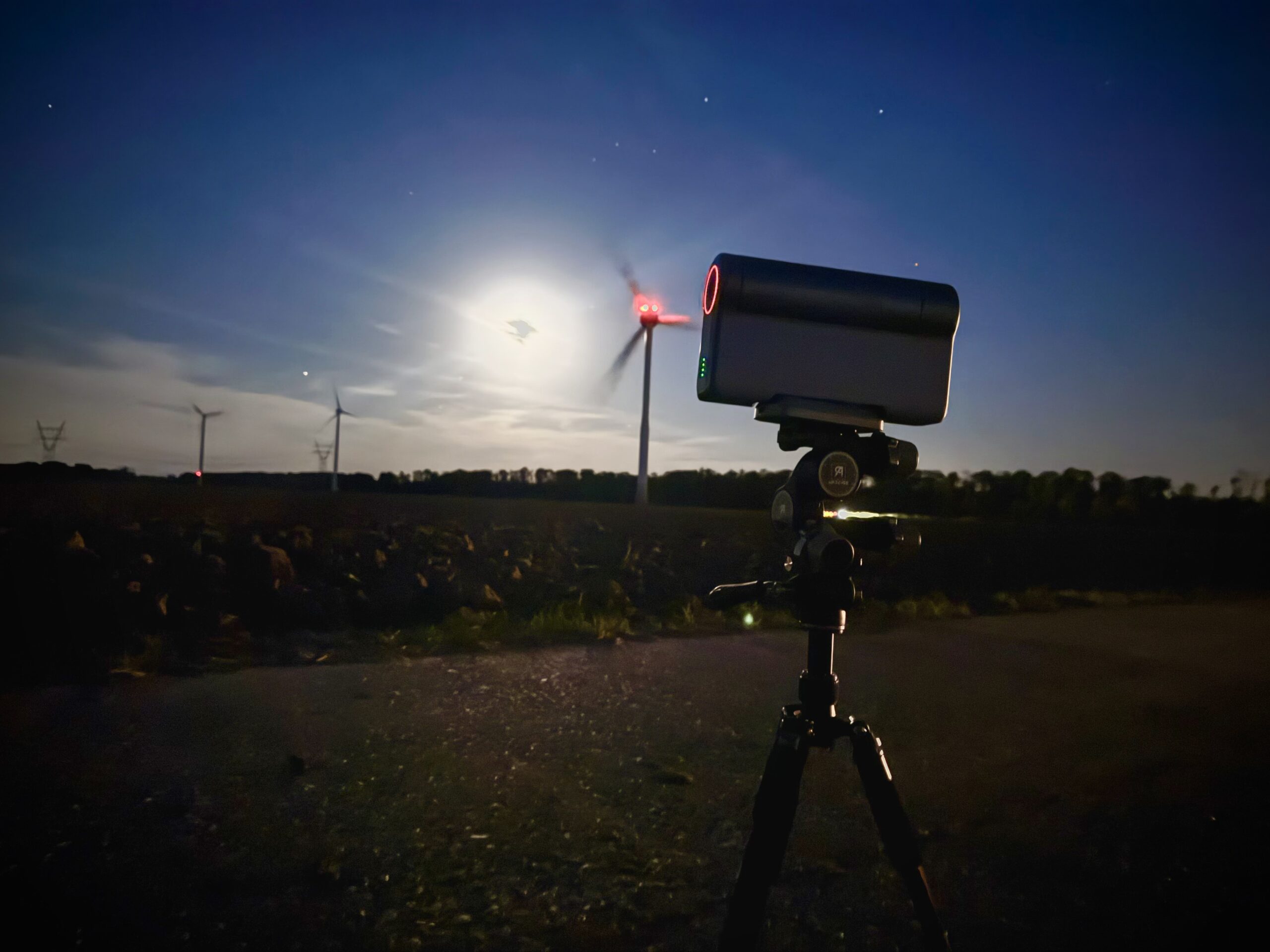
- First of all, a good stable tripod does a lot. I am using the Dwarflab Mini Tripod and I’m quite happy with it. But when I need a bit more height on the tripod I’m using the one I still have from the (failed) EduSnap Kickstarter project. This together with a weight bag to add a bit more stability.
- As I am mainly using my Dwarf 3 at home, it is by default in STA mode. No connectivity issues whatsoever, as long as you have good Wifi coverage where the Dwarf is positioned outside.
- When positioning the Dwarf, I always go for 0 degrees precision on the EQ mode, and I typically go for EQ mode on every capture. Except, Lunar/Solar capturing sessions. Put the Dwarf and tripod outside, head of the tripod already titled on the right angle for my polar alignment, quickly aim the scope towards Polaris and fire off EQ mode. Most of the time it only asks me to turn it clockwise/counterclockwise for 1 or 2 degrees and EQ mode is nicely dialed in with 0 degrees precision! 5 minutes work at the max!
- Then I search for my target in the Atlas, and tell the Dwarf to start tracking.
- However, one thing which is key in my opinion, is to allow the Dwarf 3 to track the object you selected for small period of time. As I typically use a 60 seconds exposure, I tend to wait at least 2 minutes before starting the capture of the images. In my opinion it allows the Dwarf to stabilize its tracking and avoids a good number of failed subs at the start of the session. Doing so have allowed me to get amazing success rates on the stacking percentages, 95% or so.
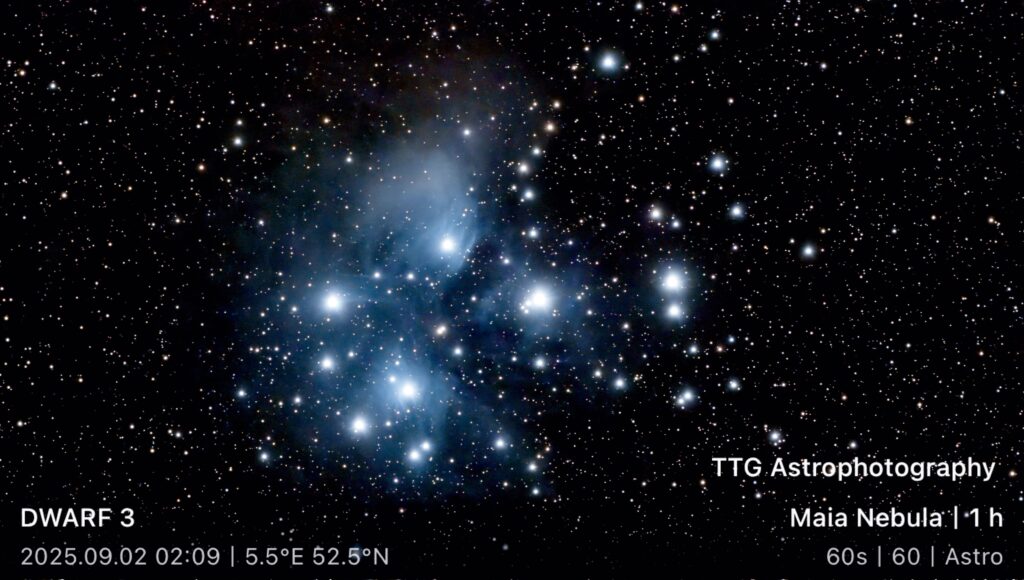
- When it comes to settings, I’m a bit of a ‘never change a winning team’ mindset. I’ve found that 60 seconds exposure, with 60 gain, have given me great results so far. And while I am fully aware that Astrophotography is way more complex than just dialing in 2 numbers, the results I get with it are more than satisfactory for the goals I have with this hobby and the Dwarf 3 in particular. Hence also the reason I didn’t embrace going deep into using more professional post-processing software yet. I explored a few options, used some, but to me it still defeats the purpose of the Dwarf 3. What Stellar Studio and MegaStack give me is enough for now. Not saying I’ll not dig into more at some point, or start using other settings more often, but with the weather limitations in the Netherlands I prefer to use settings I know work fine for now. This rather than waisting hours and loosing those rare opportunities to capture things.
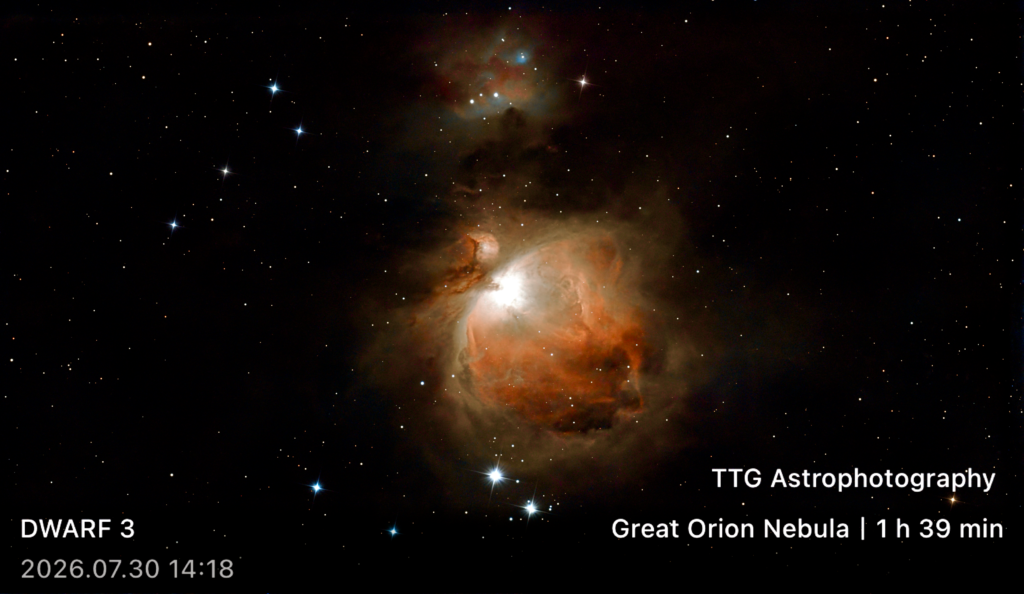
- My current routine is to drop the capture into Stellar Studio, or Mega Stack first if I have previous captures of the same target, and let the automated logic do its magic. Then pass it through Apple’s Photo App (on Mac as it has a bit more feature compared to the mobile version), or Photoshop/Lightroom. A few tweaks on the curves, a bit more or less light, a little shift on the blackpoint and maybe a little touch on the selective color saturation… and done. Some people really go way too far on those tweaks, and some people maybe have the same opinion on my edits, but I tend to stay within limits to avoid damaging the realistic feel of the end picture. One thing I don’t do is to separate the stars from the main object during the post processing. This does result a bit in color/exposure shifts on the stars when you tweak the main object. Stellar Studio does provide the option to export a starless image, but then you still need to recombine it with other 3rd party software. Hence adding another step which I prefer to avoid. It’s a personal choice, and after all, photography always allows for a little bit of creative freedom in my opinion. It’s not my goal to produce scientific encyclopedia level imagery after all.
- Apart from that, I regularly backup my Dwarf 3 data, remove old captures, while leaving targets I will revisit soon on the scope. For Instance M31 Andromeda is nice to keep on the scope’s drive and add more light to it over time with MegaStack.
- Overall it has been a true pleasure using the Dwarf 3 for 6 months now, and I keep being impressed by the quality of images this little device is able to produce.
- A few feature requests? Yeah maybe:
- Allow to combine Astro and Duo-band captures in Megastack. Quite some objects could really benefit from combining the light passed through both filters.
- Add more pictures to the objects in the Atlas. I really helps beginning astrophotographers to pick a target for the night.
- Maybe a macOS app to control the scope? Lots of people are using the Dwarf 3 from the comfort of their home, so a full size app on Mac/PC could be beneficial.
- The feature to edit the curves during a capturing session (for quick sharing)… is a bit tricky to use. Sliding those small dots around the smaller window is not that easy to do with a lot of precision. But that is just a minor suggestion to look at.
- Some people have made accessories like dew shields, Bahtinov masks, diffraction disks… which are nicely done, but it may be an idea to have official Dwarflab accessories for the Dwarf 3?
- Any chance to actually have a star removal + re-add feature in Stellar Studio? Hence we could tweak the starless image to our liking outside the Dwarflab app, re-upload and put the star mask back. This while avoiding more complex 3rd party post-processing workflows.
Apart from that, all minor suggestions in my opinion, there is not much I could wish for in view of the Dwarf 3. It does what it promised to do, and the result I got out of it so far say enough: my collection.



To endless exploration, starry nights, and a little bit of cosmic nerdiness!
TTG