Hey all,
Another clear sky night, another session. This time I decided to revisit M27.
In view of my testing to improve the overall stacking success rate (percentage of failed/discarded subs), I decided to try 60 seconds exposures again.
I took a total of 106 subs, of which 60 were stacked. So around a 56% success rate. Looking at the end results I get on all of my sessions, I’m not complaining at all. Getting this out of a smart telescope at this price set is IMO just amazing. That said however, the amount of discarded subs is a bit high. Not a big deal I guess, as additional sessions, additional total integration time and Dwarflab Megastack will make the images even better. But when not scheduling unattended sessions over night, it’s a tiny bit frustrating to see 30, 40 or even 44% of the subs discarded.
I’m waiting for some official advice from Dwarflab, as maybe a more sturdy tripod could help, but I just want to be sure we rule out any software or device issue.
That all said, let’s move to the, again amazing, end result of today’s session!
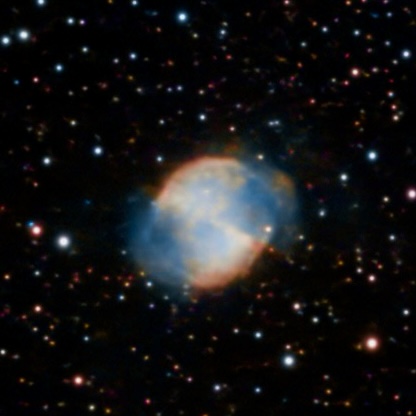
The Dumbbell Nebula (M27) is one of the brightest and most striking planetary nebulae in the night sky, located about 1,200 light-years away in the constellation Vulpecula. Formed around 10,000 years ago, it is the glowing remnant of a dying star that shed its outer layers, leaving behind a hot white dwarf at its core. The nebula’s name comes from its distinctive dumbbell-like shape, visible even in small telescopes. Through long-exposure astrophotography, its rich colors emerge, with reds from hydrogen and blues-green from oxygen gas. Capturing M27 offers a glimpse into the future of our own Sun, which will one day create a nebula like this.
M27 – Dumbbell Nebul, aka ‘Bow Tie’, ‘Apple Core’ or ‘Hourglass’ Nebula, at 60 seconds, Gain 60 with Duo-Band filter:

To endless exploration, starry nights, and a little bit of cosmic nerdiness!
TTG